Best Storage Solutions for ADHD Adults
When “Just Put It Away” Feels Impossible
If you have ADHD, you have probably heard the advice “just put things back where they belong.” Simple enough, right? Except it never quite works that way. You walk into a room, your hands are full, your brain is already three thoughts ahead, and suddenly that item lands on the nearest flat surface — forever. Before long, every counter, chair, and table becomes a storage solution by default.
Here is the truth: the problem is almost never laziness or carelessness. The ADHD brain genuinely struggles with the invisible mental steps required to put things away properly. When a storage system asks too much of you, it will fail. The good news is that there are storage solutions built around how your brain actually works — not how it “should” work.
The Golden Rule: Out of Sight Means Gone Forever
For many people with ADHD, if something is hidden in a drawer, a cabinet, or a box, it simply stops existing. This is not a character flaw. It is a real pattern connected to how ADHD affects working memory and object permanence. When you cannot see it, your brain does not hold onto the fact that it is there.
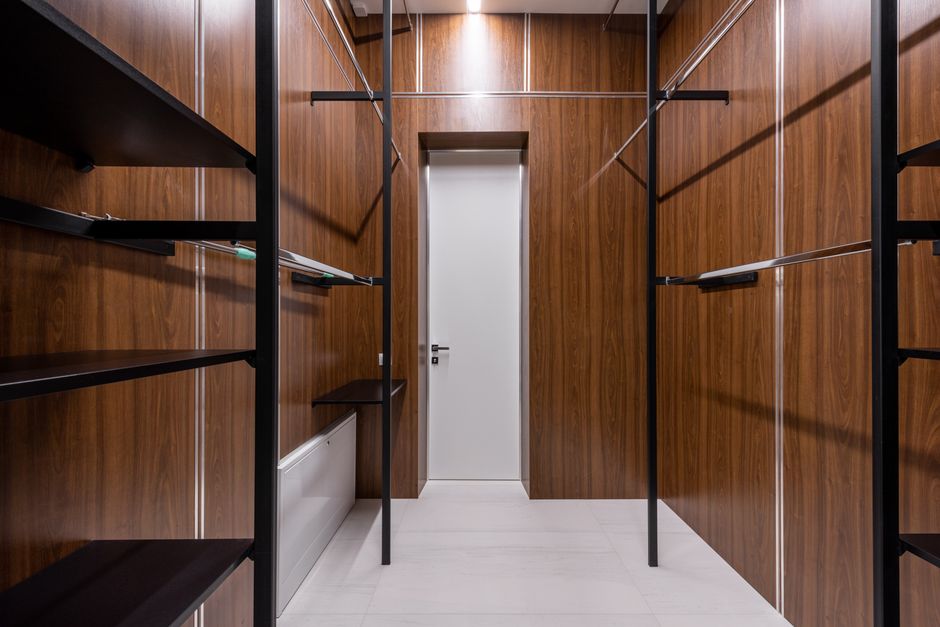
This means your best friend is open, visible storage. Think open shelves instead of closed cabinets. Clear bins instead of opaque boxes. Pegboards on walls instead of junk drawers. When your eyes can find something in two seconds, your brain does not have to do the heavy lifting of remembering where it lives.
Go through your home and ask yourself: what do I constantly lose? Keys, phone, wallet, chargers, medications? Those items deserve a visible, permanent home at eye level. A simple hook by the door or a clear tray on the counter can genuinely change your daily life.
Clear Containers Are a Game Changer
Investing in clear storage containers is one of the easiest wins you can get. When you can see exactly what is inside a bin without opening it, you save yourself a surprising amount of mental energy every single day. Opaque bins look tidy, but for an ADHD brain, tidy and functional are two different things.
Use clear bins in your kitchen pantry so you can spot what food you have. Use them in your closet so you can find that extra phone charger without emptying everything onto the floor. Use them under your bathroom sink so you can grab what you need fast. Clear containers work with your brain instead of against it.
Labels are a great bonus on top of clear containers. You do not need to go overboard — even a piece of masking tape with a handwritten word does the job. The goal is to make putting things away feel almost as easy as just dropping them on the floor.
Reduce the Number of Steps to Put Things Away
Here is a simple rule that can transform your storage systems: the fewer steps something takes, the more likely you are to actually do it. If putting your keys away means opening a drawer, moving things around, and finding the right spot, that task has too many steps. If it means dropping them on a hook right next to the door, you will actually do it.
Look at the spots in your home where clutter builds up the fastest. Those spots are telling you something. They are usually the places where the correct storage option is too far away, too complicated, or too hidden. Instead of fighting the clutter pile, try moving the storage solution to where the clutter naturally lands.
For example, if your couch always collects clothes, put a small basket or bin right next to it. If mail piles up on the kitchen counter, hang a small organizer right there on the wall. Meet yourself where you are, not where you think you should be.
Create Zones for Different Areas of Your Life
Zones are a powerful concept for ADHD brains. Instead of trying to have one perfect place for every individual item, group things by activity or purpose. A morning zone near the front door holds everything you need to leave the house. A work zone at your desk holds everything for getting things done. A wind-down zone near your couch or bed holds your books, headphones, and anything you use to relax.
When everything in a zone belongs to the same activity, your brain only has to make one decision: am I in work mode or morning mode? That kind of chunking is much easier to manage than trying to remember exactly where each individual item lives across your whole home.
Tools like the Gaveki app can help you stay on top of tasks and routines connected to these zones, especially when your brain needs a little extra nudge to start or finish a task. Pairing good physical systems with a focus support tool gives you help on both sides.
Keep It Simple Enough to Maintain
The most beautiful, perfectly organized storage system means nothing if you cannot maintain it on a regular day — not a good day, but an average Tuesday when you are tired and distracted. Design your systems for your hardest days, not your best ones.
That means avoiding systems with too many categories, too many containers, or too many rules. A shelf with three bins labeled “stuff I use daily,” “stuff I use sometimes,” and “stuff I am keeping” is infinitely more useful than a complicated sorting system you built on a motivated weekend and never touched again.
If you use an app like Gaveki to manage your focus and daily routines, you already know that simple beats perfect every time. The same principle applies to your physical space. Done and functional is always better than perfect and abandoned.
You Are Not Bad at Life — Your Systems Just Need to Fit You
Living with ADHD in a world designed for neurotypical brains is genuinely hard. But struggling with clutter and organization does not mean you are failing at adulthood. It means the traditional advice was never built with your brain in mind.
Start small. Pick one area of your home — just one — and try one of these ideas. Use clear bins. Add a hook. Move the storage closer to where the mess actually happens. Notice what feels easier. Build from there at your own pace.
Your home can become a place that works with you instead of against you. You deserve systems that make your life a little lighter, not ones that make you feel bad about yourself. Small changes, done consistently, add up to a big difference over time.
🧠 Tools That Actually Help ADHD Adults
Free ADHD Focus App
ADHD Productivity Planner
Focus Tools Bundle
Amazon links are affiliate links. We may earn a commission at no extra cost to you.
The ADHD focus app that gets it.
Brain dump, focus shield, routines, and coaching — free to start on iPhone, iPad, and Android.